An Important Revolutionary War Title
Revolutionary Warriors and Widows of Henry, Franklin, Patrick and Floyd Counties
of Virginia
Pension Applications Transcribed and Annotated by C. Leon Harris
8 ¼" x 10 ¼" format, xiv, 376 pages, color cover, internal illustrations, bibliography, comprehensive index, maps, charts, graphs. Paperback.
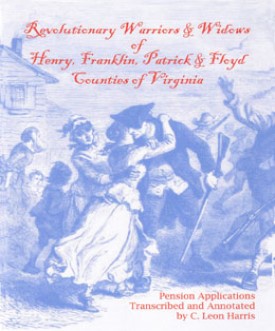 This book is a compilation and transcription of all the pension applications made by Revolutionary soldiers and widows known to have lived at any time in present Henry, Franklin, Patrick, or Floyd counties in Virginia.
These pension applications provide a unique historical perspective on a region situated to become embroiled in virtually every facet of the Revolutionary struggle. From the earliest days of the war soldiers from this area were called upon to help defend the settlers west of the Blue Ridge and the crucial lead mines at present Austinville against Cherokees and Tories. In their pension applications they describe skirmishes too obscure for the history books, but no less crucial in denying the British the support of Indians, Loyalists, and essential materiel. Those soldiers also participated in more conventional and famous engagements, including the Battle at Guilford Courthouse 60 or 70 miles to the South. There they helped make Cornwalliss victory so costly that he had to delay his invasion of Virginia. When Cornwallis did enter Virginia those soldiers once again answered the call, and many shared the final triumph at Yorktown.
This book is a compilation and transcription of all the pension applications made by Revolutionary soldiers and widows known to have lived at any time in present Henry, Franklin, Patrick, or Floyd counties in Virginia.
These pension applications provide a unique historical perspective on a region situated to become embroiled in virtually every facet of the Revolutionary struggle. From the earliest days of the war soldiers from this area were called upon to help defend the settlers west of the Blue Ridge and the crucial lead mines at present Austinville against Cherokees and Tories. In their pension applications they describe skirmishes too obscure for the history books, but no less crucial in denying the British the support of Indians, Loyalists, and essential materiel. Those soldiers also participated in more conventional and famous engagements, including the Battle at Guilford Courthouse 60 or 70 miles to the South. There they helped make Cornwalliss victory so costly that he had to delay his invasion of Virginia. When Cornwallis did enter Virginia those soldiers once again answered the call, and many shared the final triumph at Yorktown.
The soldiers accounts of these events are especially valuable because the Revolutionary War in the South has been so neglected in comparison with events in the North, such as Bunker Hill and Valley Forge. Some battlefields in the South where hundreds fought and bled are less famous than places in the North where George Washington merely slept.
Veterans applying for pensions had to prove their services by naming their officers and regiments and by describing their travels and engagements. This was especially important for militiamen, because written records of their service, if kept at all, were in county or state archives rather than in the War Department in Washington. During the Revolution all able-bodied men between 18 and 55 were required to belong to the militia of their county, and they volunteered or were called out as needed to serve tours of several weeks or months. In contrast, Continental soldiers either enlisted or were drafted to fill state quotas set by Congress, and they typically served for 18 months, or for two or three years, or for “during of the war.” Both militiamen and regular soldiers usually served in companies with their neighbors. It is clear from reading the pension applications that their service made indelible impressions on these young men. More than half a century later almost all remembered the names of their captains and the battles they were in.
These depositions have already enabled historians to correct and amplify many published accounts of events during the war.
The pension applications of the soldiers and their widows are also valuable to genealogists. The applicants generally had to state their ages, and depending on which act the application was made under, they had to provide information about their families and where they had lived. The first act of interest here was passed in 1818 and applied only to veterans in the Continental Line (Regular Army), and only if they were in “reduced circumstances.” Even with these restrictions an enormous number of veterans applied – so many that in 1820 Congress required those pensioners to prove their need by describing their property and families. In 1832 Congress finally provided pensions for all surviving Revolutionary War veterans, regardless of need or whether they were Continental or Militia soldiers, and it required the applicant to state when and where he was born and where he had lived. Congress later provided pensions and bounty lands to the widows of veterans, and those applications are especially rich in genealogical information, sometimes including original family registers from Bibles and copies of marriage bonds.
Listing of transcribed applications:
Mary HATCHER ASBURY; Joel and Milly BRIZENDINE ASHWORTH; John ATKINS; Elihu and Lydia OWEN AYERS (AYRES); James AYRES; John and Mary ADAMS BANKS; Richard BARNS (BARNES); John BARRETT; Benjamin and Rachel PRATHER BEASLEY; Bartlet and Alice BELCHER; Benjamin BELCHER; Walter BERNARD; Henry and Fanny SIMPKINS BISHOP; Willoughby BLACKARD; Joel BLANCIT (BLANCET, BLANCETT); Abraham and Susan WIATT BLANKENSHIP; Henry BLEVINS; James BOAZ; John BOMAN (BOWMAN); Thomas BOOTH; Betsy ARTHUR BOWLES, widow of George BOWLES; James BOYD; Andrew and Dorothy MCNEALY BREDEN; William BRIZENDINE; Jesse BROCK; James and Ruth DYER BRYANT; Daniel BURCHEL; Jarvis BURDETT; Michael BURRUSS;
John CAMPBELL; William and Sally CAMPBELL; John CARPER; William and Martha MCKINSEY CARTER; William and Susannah CARTER; James CASSADAY; Tully and Rebecca SIMS CHOICE; William and Mary McDONALD CHOICE; William and Nancy VAUGHN CLOUD; Samuel and Sarah NORTHCUTT COCHRAN; William and Mary BARNS COCHRAN (COCKRAN); William COFF (CUFF); Daniel and Mary HURT CONNER; Sterling COOPER; John Peter and Flizabeth PARR CORN; Nancy HANCOCK CORN, widow of Jesse CORN; Thomas and Mary DAVIS CRAIG; Nancy CRITZ, widow of Haman CRITZ; John CROUCH; James CROWLEY; Richard and Polly HAISLIP DALE; Lewis DAVIS; Isaac DEHAVEN; William and Jane KING DESHAZO; Elijah DICKENSON; Benjamin DILLEN ;
Nathaniel DIXON; William and Anna CHAPPEL DRAKE; John DUNCAN; Isham and Mary EAST; Benjamin EDWARDS; Robert ENGLISH; Adria DUDLEY ENGLISH KEMP, widow of William ENGLISH; Lyddal ESTES; William FAIN; Matthew FARMER; John FIELDS ; Harvey and Elizabeth GAZAWAY FITZGERALD; Thomas FLEEMAN; Charles and Mary NELSON FODRELL; Lewis FRANKLIN; Ann GUTHRIE FRENCH, widow of Daniel FRENCH; William FRENCH; William FUSON; James GARDNER; John GIBSON; Richard GILLEY; William and Mary GOING; Thomas GOODSON; Jacob GOWEN; Zephaniah GOWEN; Charles GOWENS; David GRAVES; Joseph GREEN ; William and Betsy GREEN; Moses GREER ; Chisholm GRIFFITH; Thomas HALE; John HALL; Sarah DALTON HANBY, widow of Jonathan HANBY;
Benjamin and Susannah MARTIN HANCOCK; William HAPPER (HOPPER); Henry HARRIS; James and Keziah MINOR HARRIS; James and Patte HARRIS; William Harris and Lydia RENFRO HARRIS; John HEARD (HURD); Abram HELTON; Edward HENDERSON; Zachariah HENDRICKS; James and Elizabeth HICKEY; Miles and Maria JOHNSON HICKS; Edward HILTON (HELTON); Farthing HIX; Abednego HODGES; Sarah TURNER HOLLAND, widow of Drury HOLLAND; John M. HOLLIDAY; Peter HOWARD; Daniel HOWELL; Hall HUDSON; Thomas HUDSON; John HUFF; Joseph HUNDLY; Leonard HUTTS; Nathaniel Newman HYLTON; Micah JOHNSON; Joice WELLS JOHNSTON, widow of James JOHNSTON; David JONES; John JONES; Thomas and Lavina JONES; Zacharia James KEATON; David KEETON; William and Elizabeth GARLICK KEMPLIN ;
John KING; Stephen KING; Ephraim and Polly BOLIN LANDS; Henry LAW; John LAW; Randolph LAWSON; Martel and Elizabeth BACON LESUEUR ; Charles and Patty RIVES LUMSDEN; Mary BAILEY MARTIN, widow of George MARTIN; Joseph and Patsy BAILEY MARTIN; Francis and Sally BURRUSS McCRAW ; Andrew and Anna FISHER McGINNIS; Archibald McHONE; John and Judith LEATHERS McLAUGHLIN; Jacob McNEIL; John and Mary PARSONS MIDKIFF; Jordan and Mary PEACOCK MILAM; James MILLER ; Henry MITCHELL; Ambrus MULLINS; Joseph and Sarah MURPHY; Newsom and Mary NUNN PACE; Edmund PAINE; Elizabeth BEHELER PHARIS, widow of Amaziah (Amariah) PHARIS; Charles PHILLPOTT; James and Betsy SMELSER PIERCY; Michael PILGRIM; Chapman and Elizabeth RUNNELLS POINDEXTER; Chattin and Mary GREER POLLARD;
Jonathan PRATER; John PRICE; Richard PUGH; Thomas RAMSEY; Benjamin and Frances HURTWILL RAY; James RAY (WRAY); John REDD; John and Esther PEAK RENFRO; Alexander REYNOLDS; Richard D. and Nancy GRISOM REYNOLDS; Richard RICHARDSON; Thomas RICHARDSON; Richard ROBERTSON; John ROYAL; Philemon SAUNDERS; Nathaniel SCALES; Humphrey SCROGGINS; Joseph SEAMONS (SIMMONS); Matthew SEAY; William SHACKELFORD; John and Frances SHARP; Daniel SHELOR; Samuel SHUMATE; Augustin SIMS; Abraham SINK; Henry SMITH; Henry and Elizabeth POWELL SMITH; John SMITH; Sarah SPENCER SMITH, widow of John SMITH; William SMITH; William and Anne PRESTON SMITH; John and Sarah LYNCH SPENCER; Moses SPENCER; Timothy and Mary SPENCER; James STAGEL; Richard STANLEY; David STEPHENS;
William STEWART; Benjamin STRATTON; Daniel SULLIVAN ; Frances PENICK SUTHERLAND, widow of Philemon SUTHERLAND; James TARRANT; James TAYLOR; Joseph TERRY; William TINCH (TENCH); Thomas TOWNSEND; Thomas TRAIL; Dennis and Martha COOPER TRAMELL; Joseph and Molly MCKENNEY VARNER; John and Sarah WRIGHT VIER (VIAH); Benjamin VIERS; Axton WHITECOTTON; William WILLIAMS; Josiah WOODS; Martin and Susana ROBERSON WOODY; Peggy WRIGHT, widow of James WRIGHT; John WRIGHT; James YOUNG; John YOUNG;
To view a digital copy of the index to this book, visit Index-Rww
(Close the pdf file with the left arrow to return to Iberian's catalog)
[Rww] $31.95 (available only in printed version)







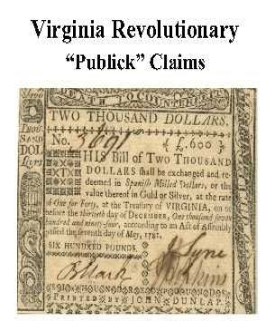 As Continental forces and Virginia militia units were engaged in winning independence, American quartermasters and provisioners struggled to provide these units with all the necessities of life, from meals and guns to meat, fodder for horses, the horses themselves, firewood, and every other type of material. Much of this was requisitioned from the civilian population and certificates were issued payable in either continental or state funds, depending on the units supplied, upon presentation to court authorities. Thousands of these certificates issued to Virginians were duly entered by the courts, and they provide a fascinating insight into the period of the Revolution. These "Publick" Claims booklets contain interesting and useful information about the contributions of ordinary people to the Revolutionary War. They provide some details of people's service in the militia or as guards for prisoners of war; they indicate where some bodies of troops were at particular times; and they identify providers of horses, wagons, cattle, grain, or other supplies. Much of the information in these booklets cannot be found anywhere else, which makes the surviving records particularly valuable. Also remarkable is the fact that records survived from virtually every county in the state at that time with the exception of the newly formed Kentucky counties. This makes the collection even more valuable in covering areas which heretofore in this time period have suffered from a lack of personal data. The "Virginia Publick Claims" are published by counties. In addition to a faithful transcription by Janice Luck Abercrombie and the late Richard Slatten, a complete index is provided for each county booklet. This series is an extremely important genealogical tool for searchers in Revolutionary-era materials.
 back in print!!! VIRGINIA REVOLUTIONARY "PUBLICK" CLAIMS
now available in a soft cover binding 1131 pages, 3 volume set. The entire set of seventy county booklets listed below, in three volumes, with a single
comprehensive index at the end of volume 3. Purchased separately, the county booklets would
cost ca. $450. This new printing is on 24#, acid-free stock in a durable and
attractive binding. The hardbound edition of this set has been sold out and is now commanding premium prices on the used book market.
[VPC3P] $152.00 (paper version)
back in print!!! VIRGINIA REVOLUTIONARY "PUBLICK" CLAIMS
now available in a soft cover binding 1131 pages, 3 volume set. The entire set of seventy county booklets listed below, in three volumes, with a single
comprehensive index at the end of volume 3. Purchased separately, the county booklets would
cost ca. $450. This new printing is on 24#, acid-free stock in a durable and
attractive binding. The hardbound edition of this set has been sold out and is now commanding premium prices on the used book market.
[VPC3P] $152.00 (paper version)
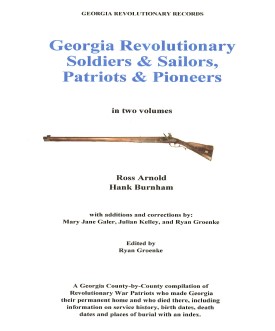 GEORGIA REVOLUTIONARY SOLDIERS AND SAILORS, PATRIOTS AND PIONEERS
compiled by H. Ross Arnold and Hank Burnham. 2001, viii, 803 pages, 2 volumes. index.
Originally published as Georgia Revolutionary War Soldiers' Graves [1993], this work
has been significantly upgraded in the past decade to reflect new grave sites, as well as the losses
incurred by the French soldiers in the siege of Savannah.
GEORGIA REVOLUTIONARY SOLDIERS AND SAILORS, PATRIOTS AND PIONEERS
compiled by H. Ross Arnold and Hank Burnham. 2001, viii, 803 pages, 2 volumes. index.
Originally published as Georgia Revolutionary War Soldiers' Graves [1993], this work
has been significantly upgraded in the past decade to reflect new grave sites, as well as the losses
incurred by the French soldiers in the siege of Savannah.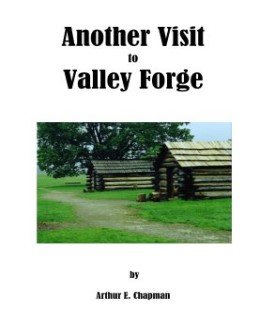 ANOTHER VISIT TO VALLEY FORGE
by Arthur E. Chapman.
2003, paper, 127 pages, introduction.
ANOTHER VISIT TO VALLEY FORGE
by Arthur E. Chapman.
2003, paper, 127 pages, introduction.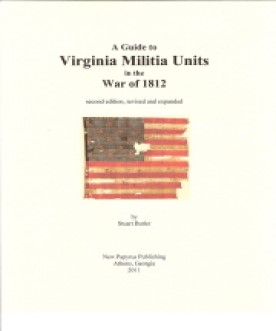 2011, xvi, 270 pages, index, maps, photos. When this volume first was published in 1988, it quickly became a definitive study on the role played by the Virginia militia in defense of both the state and the nation in the Anglo-British conflict.
The author of the volume spent his career with the National Archives and Records Administration in the Old military and Civil Branch Records, where he specialized in early American military records. Since his retirement, Mr. Butler has continued his research in the area of the War of 1812, and with the upcoming bicentennial of the conflict, the product of this expanded research is presented in this new work. The primary sources of information for this enlarged volume
are found among the massive holdings of the National Archives and Records Administration in
Washington, DC. In addition, materials have been drawn from numerous other state and local
archival collections to present a balanced, scholarly account of the Virginia militia and its role
in this war. This book is as complete a guide to the militia units raised in Virginia as records permit. The book is
divided into three parts: Part I describes the organization of the Virginia militia, i.e., its
regiments, battalions, and companies, and explains in what manner it was to be called up
during an emergency. Part II frames an expanded history of the role played by the Virginia militia during
this conflict. Part III, the largest portion, is a county-by-county listing of the units, with the
naming of the regimental commanders, company commanders, and the known action and movements of the unit during the war. The
book includes the name of the company or unit commander, not every soldier who served
within that unit. Researchers who have secured copies of CMSRs [compiled military service
records] from the National Archives or other sources will be able to determine the unit in which a
soldier served, where and when that unit operated, and, in most instances, ascertain the soldier's
county of origin. A complete index of unit commanders completes this standard reference work. What is presented here is a distillation of a life's research by the premier scholar in the field of the War of 1812.
2011, xvi, 270 pages, index, maps, photos. When this volume first was published in 1988, it quickly became a definitive study on the role played by the Virginia militia in defense of both the state and the nation in the Anglo-British conflict.
The author of the volume spent his career with the National Archives and Records Administration in the Old military and Civil Branch Records, where he specialized in early American military records. Since his retirement, Mr. Butler has continued his research in the area of the War of 1812, and with the upcoming bicentennial of the conflict, the product of this expanded research is presented in this new work. The primary sources of information for this enlarged volume
are found among the massive holdings of the National Archives and Records Administration in
Washington, DC. In addition, materials have been drawn from numerous other state and local
archival collections to present a balanced, scholarly account of the Virginia militia and its role
in this war. This book is as complete a guide to the militia units raised in Virginia as records permit. The book is
divided into three parts: Part I describes the organization of the Virginia militia, i.e., its
regiments, battalions, and companies, and explains in what manner it was to be called up
during an emergency. Part II frames an expanded history of the role played by the Virginia militia during
this conflict. Part III, the largest portion, is a county-by-county listing of the units, with the
naming of the regimental commanders, company commanders, and the known action and movements of the unit during the war. The
book includes the name of the company or unit commander, not every soldier who served
within that unit. Researchers who have secured copies of CMSRs [compiled military service
records] from the National Archives or other sources will be able to determine the unit in which a
soldier served, where and when that unit operated, and, in most instances, ascertain the soldier's
county of origin. A complete index of unit commanders completes this standard reference work. What is presented here is a distillation of a life's research by the premier scholar in the field of the War of 1812.
 THE 47th VIRGINIA INFANTRY
by Homer D. Musselman. 2nd edition, 2010. Paperback, 6x9, x, 228 pp, illustrations, maps, color photos. This definitive study of the 47th Va. Infantry was first published in 1991, and today copies of the original volume are on the used book market for more than two hundred dollars. The author has continued his research into the unit's history and has significantly expanded the original, especially in the unit roster. Like its predecessor, this work is destined to become the definitive study on this element of Civil War history.
THE 47th VIRGINIA INFANTRY
by Homer D. Musselman. 2nd edition, 2010. Paperback, 6x9, x, 228 pp, illustrations, maps, color photos. This definitive study of the 47th Va. Infantry was first published in 1991, and today copies of the original volume are on the used book market for more than two hundred dollars. The author has continued his research into the unit's history and has significantly expanded the original, especially in the unit roster. Like its predecessor, this work is destined to become the definitive study on this element of Civil War history.


